

between wash days
dry shampoo for curly hair: refresh the roots or wash?
your roots and your curls don't always need the same thing.
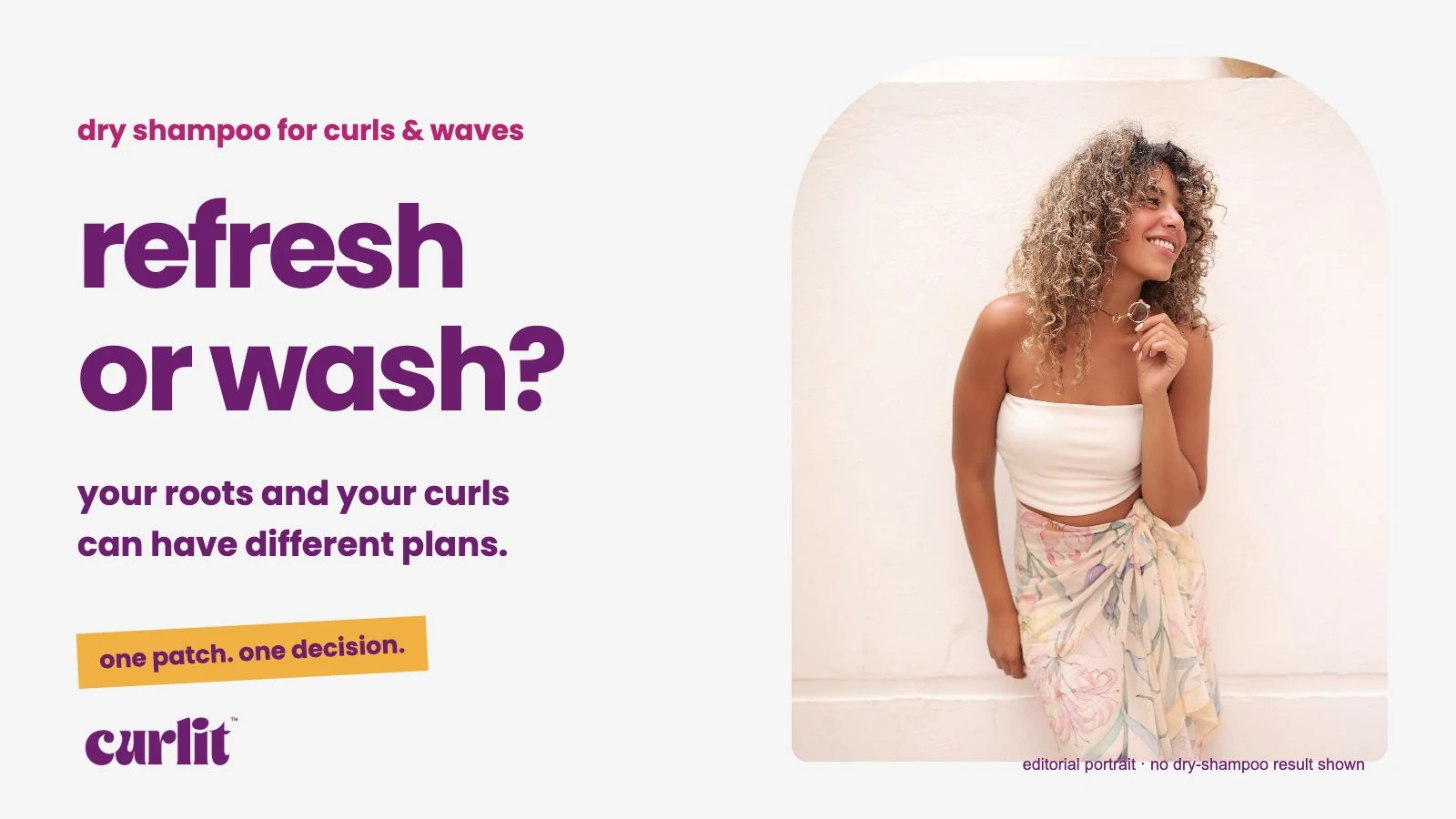
your roots have clocked out. your curls are still doing excellent work. do you really need to start the whole wash-day production again?
dry shampoo can be useful, but first work out what you want to change. oily-looking roots, a sweaty scalp and flattened waves are different problems. one can does not automatically have three jobs.
the short version
can you use dry shampoo on curly or wavy hair?
yes, when the product suits your hair and its directions fit the way you want to style it. dry shampoo absorbs oil; it does not replace washing with shampoo and water. keep that distinction in mind before trying to save a good curl day.
our starting point: choose the smallest useful intervention. if only your roots look oily, assess the roots. if your scalp needs washing, a fresh-looking style is not a substitute. if the issue is shape alone, dry shampoo may not be the step you need.
01 / before you reach for the can
is it oil, sweat, residue or just a flat shape?
look at the roots and lengths separately. this is a styling check, not a way to diagnose a scalp condition.
oily-looking roots, comfortable scalp
a targeted dry-shampoo refresh may be worth considering. check the label and think about the finish you want to keep.
hair still damp after a workout
check the product’s required starting condition. if the label specifies dry hair, follow that instruction. don’t treat dampness as a request for more powder.
visible residue or an uncomfortable scalp
pause the styling rescue. adding another layer won’t tell you what caused the problem. make cleansing and scalp comfort the priority.
clean-feeling roots, waves pressed flat
decide whether you actually mind the looser shape. dry shampoo’s oil-absorbing job is not the same as rebuilding your curl pattern.
you do not have to turn every softer wave into a full refresh. sometimes “leave it alone and get dressed” is a perfectly respectable routine.
02 / the directions matter
check how the product goes on and comes out
“dry shampoo” is a category, not one set of instructions. before buying, read the required hair state, application method, waiting time, removal step and warnings on that exact product.
look for the application, waiting and removal steps on your own product. if it calls for brushing or combing out excess, include that step in your decision before using it. don’t borrow a spray distance or timing from a different bottle.
the curl-friendly question
“can i follow these removal instructions while keeping the style i want?”
if your chosen formula needs brushing out and you want to preserve tightly grouped curls, that is a real trade-off. choose a suitable product and follow its directions, or wash and restyle. leaving excess behind just to protect definition is not a clever shortcut.
03 / keep the intervention small
plan a targeted refresh without coating every curl
the American Academy of Dermatology’s guidance recommends small amounts where oiliness is present, following the label’s waiting and removal instructions, and continuing regular washing. too much can leave hair gritty or stiff. its dermatologists suggest washing after one or two dry-shampoo uses, while noting there is no universal number.
- name the area. is it the parting, front roots or another specific patch? “my hair needs fixing” is a much bigger job than “this part looks oily.”
- set a realistic finish. do you want to keep your curls grouped, accept softer waves, or wear your hair tied back? make that choice before using a product that needs a different finish.
- follow the exact label. use its application, waiting and removal steps. don’t turn another brand’s tutorial into instructions for your bottle.
- check before adding more. look at the parting and hairline in ordinary light. if you can see leftover product, deal with that according to the directions before deciding the answer is another layer.
for curls you want to keep grouped, focus your styling decisions around that goal. for waves, you might be comfortable with a looser, fuller finish. neither texture has to follow someone else’s definition standard.
04 / make the actual decision
three everyday situations, three different choices
these are examples written by Curlit, not customer results or a test of any product.
“the front looks oily; the rest still looks good.”
your goal is limited. check whether a targeted application and the required removal suit that front section. leave the rest out of the project unless it needs attention too.
“i’ve finished the gym and my roots are damp.”
first decide whether you need to wash. if you choose a temporary styling refresh, respect the product’s dry-hair instructions. a less oily appearance does not mean sweat and buildup have been washed away.
“my waves are flat, but they don’t look oily.”
skip the automatic purchase. you can keep the softer look, change your hairstyle, or do the small styling refresh you already know works for you. oil absorption may not answer this particular complaint.
if dry shampoo causes itching, burning or irritation, stop using it. persistent or worsening symptoms deserve a dermatologist’s advice. don’t use more fragrance or powder to cover a scalp problem.
05 / your two-minute decision note
save the style, or book the wash?
copy these three lines into your notes. answer them before adding anything.
what needs changing?
the specific area and issue: ____. the rest of my hair: ____.
what will this product require?
starting hair state: ____. application and removal: ____. does that suit the style i want to keep? ____.
what am i choosing?
leave it / targeted refresh / wash and restyle. my reason: ____.
a filled-in example
“only my front roots look oily. the lengths are fine and my scalp feels comfortable. this product needs brushing out, and i don’t want to brush those curls today. i’ll skip it and plan a wash instead.”
the useful outcome is a choice that makes sense, including deciding not to buy or apply something. the note is not a medical checklist.
our Curlit take: stop making your whole head solve one patch
a good routine gives each step a reason. dry shampoo can address oily appearance; your styling routine addresses the shape you want to wear. keep those decisions separate and you can avoid turning every in-between day into a product pile-up.
if the real reason you’re postponing a wash is the drying time, start there. our guide to why curly hair takes so long to dry helps you examine that part of the routine.
your curls can have another day. your scalp still gets a vote.
how we put this together
we reviewed dermatologists’ published guidance and manufacturers’ application instructions in October 2026, then built the decision note and examples for curls and waves. we did not test dry shampoos, rank brands or examine anyone’s scalp. check the label on the product you actually have; formulas and directions can change.