

curly, Tips and tricks, wavy
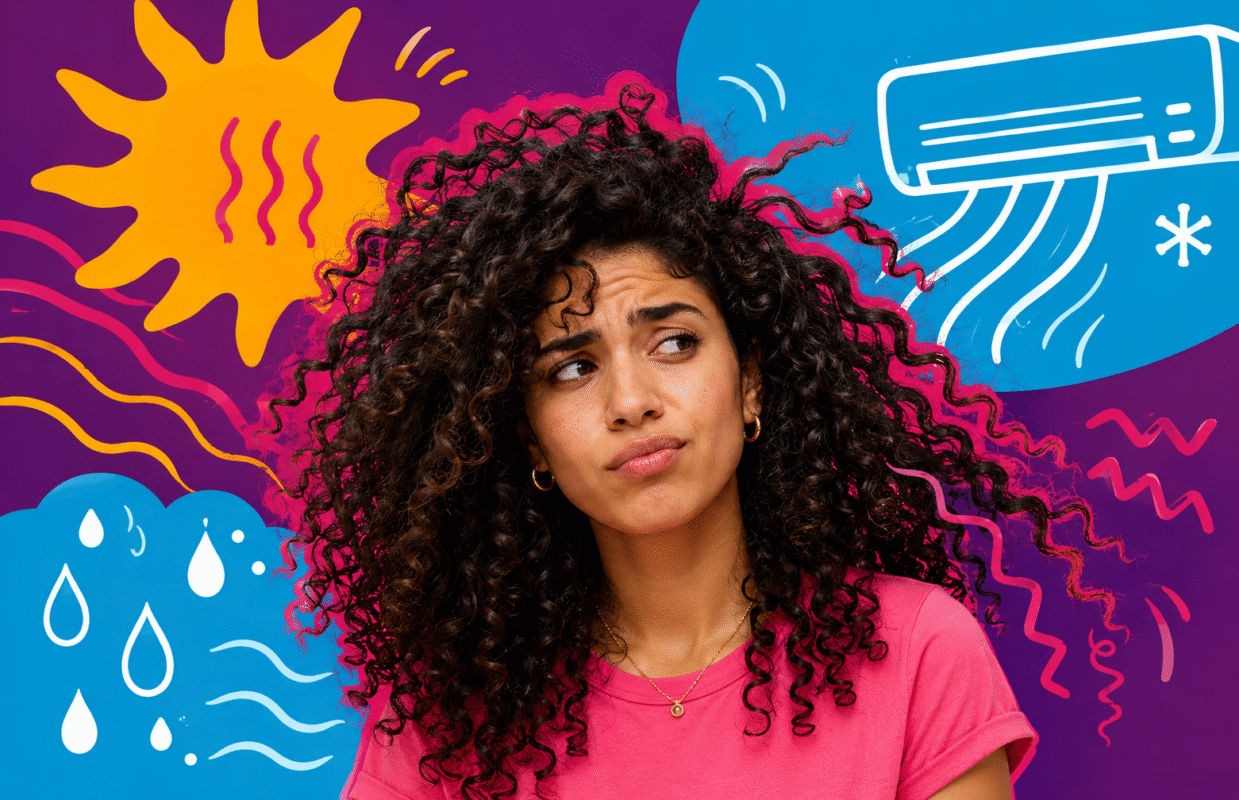
Managing Curly & Wavy Hair in Egypt’s Summer Heat
Jul
How can I keep curly and wavy hair manageable in Egypt’s summer heat and humidity?
Egypt’s summer is not the season for complicated hair goals. If you want curly and wavy hair to stay manageable in the heat and humidity, focus on three things: keep your scalp clean enough for sweat season, condition for softness (without drowning your texture), and style on wet hair with the lightest amount of hold that still keeps your pattern together.
And a reality check we all need: your hair can look intentional without looking “perfect.” Intentional in Egypt means your hair looks like you chose it on purpose—defined enough to read as curls/waves, controlled enough to survive the commute, and easy enough to refresh between plans.
Table of Contents
Facts Card
Short answer: To keep curly and wavy hair manageable in Egypt’s summer, cleanse often enough to remove sweat buildup, condition for softness without heaviness, and apply your styler on wet hair to keep your pattern together. Use a small amount of product, avoid brushing dry, and refresh midday with water (not more layers).
- July and August in Egypt see average daily highs over 31°C and significant humidity.
- Heat and humidity can increase frizz, flatten waves/curls, and make hair feel heavier.
- Sweat, urban pollution, and hats or scarves can compound problems.
- Curly hair often frizzes, loses its shape, or poofs in humidity.
- Wavy hair may loosen, look stringy or frizzy, or collapse with sweat.
- Apply stylers or gels while hair is wet to lock in shape; avoid overloading.
Key Metrics
| What | Simple target |
|---|---|
| Typical summer high (Egypt) | 31°C+ |
Curly vs Wavy Comparison
| What changes | Curly hair | Wavy hair |
|---|---|---|
| Biggest summer struggle | Frizz + poof when clumps separate; shape can expand fast. | Collapse at the roots; waves loosen and can look stringy by midday. |
| Conditioning target | More slip and softness so curls form clumps easily. | Enough softness for frizz control, but light enough to keep lift. |
| Styling product placement | All over, on wet hair, with emphasis on keeping sections clumped. | Mostly mid-lengths to ends; go easy at roots to avoid flatness. |
| Refresh strategy | Wet hands + re-scrunch clumps; spot-define the top layer. | Mist with water, scrunch, then lift roots (clips if needed). |
Step-by-step Curl and Wave Guide
Why Egypt’s summer is tough on curly and wavy hair
July and August in Egypt see average daily highs over 31°C and significant humidity. That combo is exactly why your hair can look great at 9am and questionable by 1pm.
Heat and humidity can increase frizz, flatten waves/curls, and make hair feel heavier—especially once you add sweat, walking outside, and jumping between hot streets and strong A/C.
Sweat, urban pollution, and hats or scarves can compound problems. They add buildup at the roots (hello, flat crown) and friction around the hairline (hello, frizz halo). The goal isn’t to “win” against summer—it’s to build a routine that stays presentable with less effort.
- Treat summer like “scalp season”: if your roots feel sweaty or itchy, a gentle wash can help more than adding more styling product.
- Expect the hairline and crown to frizz first; plan for quick touch-ups there instead of redoing your whole head.
- If you cover your hair, keep a small clip handy—loosely pinning the front can reduce friction and frizz around the face.
What changes for curly vs wavy textures (and what “intentional” looks like)
Curly hair often frizzes, loses its shape, or poofs in humidity—especially if your curl clumps separate during the day.
Wavy hair may loosen, look stringy or frizzy, or collapse with sweat. Waves usually need less product than curls, but they often need smarter product placement (roots and mid-lengths get weighed down fast).
The shared challenge is balancing hold, definition, and lightness. In Egyptian summer, “intentional hair” usually means:
- your texture is visible (waves/wringlets are easy to read),
- your roots aren’t greasy or plastered down,
- you have a plan for the frizz halo above the head (because humidity may create a ‘halo’ of frizz above the head),
- and you can refresh in 60 seconds without a full wash.
Think of it like this: curls usually need more clumping + hold, while waves usually need more lift + light hold.
- If you have curls: prioritize clumps (bigger sections) and use enough hold to keep them together through the day.
- If you have waves: prioritize lift at the roots and apply stylers mostly from mid-length to ends so you don’t lose volume.
- Aim for “defined but touchable,” not “perfect and frozen”—summer will humble everyone.
Egypt-specific frizz + shape tactics that actually help
In summer, the biggest routine wins are usually about timing and amounts—not buying 12 new products.
1) Cleanse for sweat without overdoing it. Use gentle cleansing to manage sweat buildup (washing more often may be helpful). If your scalp is sweaty, product sits weirdly and your roots collapse.
2) Condition for moisture, not weight. Conditioning is still crucial: aim for moisture, not weight. If your hair feels heavy, reduce the amount, keep conditioner off the roots, or rinse a little more thoroughly.
3) Style on wet hair, then stop touching it. Apply stylers or gels while hair is wet to lock in shape; avoid overloading. Wet styling helps your pattern form in bigger, smoother groups—then you can let it set.
4) Define strategically. Scrunching or finger-coiling can help define curls and waves. You don’t need to coil the whole head—do just the frizziest top layer or the pieces that frame your face.
5) Refresh like a minimalist. Most people refresh better with water (or a light mist) and re-scrunching than with piling on more product. Too many layers can turn into sticky buildup fast in Cairo heat.
- Use a gentle wash when your scalp is sweaty; don’t “power through” buildup with dry shampoo and prayers.
- Apply your styler on soaking-wet hair, then scrunch with a T-shirt or microfiber towel to remove drips without roughing hair up.
- For the frizz halo: wet your hands, smooth the top lightly, and scrunch—try that before adding extra gel/cream.
- If your waves get stringy, use less product and focus on scrunching + lift at the roots (clips help while drying).
Quick summer routine examples (curly vs wavy)
Use these as starting points, then adjust the amount—that’s usually where summer routines succeed or fail.
Curly routine (simple + humidity-aware):
1) Gentle shampoo (as needed for sweat).
2) Hydrating conditioner (mid-lengths to ends).
3) Styling gel or cream on wet hair (small amount, add water if it feels thick).
4) Scrunch; optional finger-coil just the top/front.
5) Air dry or diffuse on low; hands off until fully dry.
Wavy routine (lightweight + anti-collapse):
1) Light cleanser (more often if you sweat).
2) Lightweight conditioner (focus on ends; rinse well).
3) Lighter leave-in or foam (mid-lengths to ends; avoid roots).
4) Scrunch; microplop with a T-shirt.
5) Air dry; add root clips for lift if you lose volume.
Both: avoid brushing dry; refresh mid-day with mist or water only. If you’re going out at night, a quick wet-hands refresh + 30 seconds of scrunching usually reads more “done” than adding new layers of product.
- If your hair dries frizzy: style wetter, use a little more hold, and touch it less while drying.
- If your hair dries flat: use less product at the roots and add root clips for the first 20–30 minutes.
- If your hair feels heavy by day 2: wash/cleanse a bit more often in summer instead of stacking more product.
Where Curlit fits in a summer routine (as a local option)
Locally developed routines/products may better match Egyptian needs than international “curly girl” advice. Not because global advice is “wrong,” but because Egypt’s heat, humidity, water differences, commute realities, and covering habits change what feels practical day-to-day.
If you want to try a local option, Curlit is an Egyptian brand built specifically around curly and wavy routines in this climate. The easiest way to test fit is to keep it simple: pick one styler or one conditioning step, use it consistently for a week, and judge it by manageability (less frizz, better shape retention, easier refresh)—not by one perfect hair day.
If you’re building a summer lineup from scratch, aim for: one cleanser you can use more often, one conditioner that doesn’t weigh you down, and one styler that gives you the level of hold your texture needs.
- Try one change at a time (one product or one technique) so you can tell what helped.
- Pick “enough hold to survive the day” for curls, and “light hold + lift” for waves.
- Judge success by repeatability: if you can refresh fast and feel put-together, it’s working.
Helpful links: Shop Curlit.
Common Mistakes
- Piling on more and more product hoping it will “control” summer frizz (it often turns into sticky buildup).
- Skipping conditioner out of fear of heaviness instead of adjusting the amount or where you apply it.
- Brushing hair dry to “fix” it, then wondering why the frizz halo got bigger.
- Trying to refresh by adding more layers instead of re-wetting and re-scrunching first.
FAQ
Q: Can I fully eliminate frizz in Egypt’s summer humidity?
A: No routine or product eliminates frizz completely in high humidity, but you can reduce it a lot by styling on wet hair, using the right amount of hold, and refreshing with water instead of extra layers.
Q: Should I wash my hair more often in summer if I have curls or waves?
A: Often, yes—because sweat and buildup can flatten texture and make styling harder. Use a gentle cleanser and adjust frequency based on how your scalp feels.
Q: My waves go flat in the heat—what’s the fastest fix?
A: Use less product at the roots, add root clips while drying, and refresh with water + scrunching. If you add product, keep it mainly on mid-lengths and ends.
Q: Why does my curly hair puff up even when I use gel?
A: Common reasons are applying gel on damp (not wet) hair, using too much product so clumps break apart later, touching hair while drying, or needing a refresh with water rather than more product.
Q: What does “intentional” hair mean if I’m wearing my texture in Egypt?
A: It means your curls/waves are recognizable and styled on purpose: defined enough to read as texture, controlled enough to survive heat/commutes, and easy enough to refresh quickly.