

Feb
How to Stop Humidity Frizz in Egypt Without Losing Definition
Stop frizz humidity Egypt curly hair problems are real. You step outside, your curls or waves look great for 10 minutes, then the puff appears like it has a personal mission. The fix is not “add more product forever.” The fix is (1) identify your frizz type, (2) apply the right amount on very wet hair, and (3) stop touching while it dries.
Table of Contents
Facts Card
- Humidity frizz vs dryness frizz: They look similar, but they need different fixes.
- Wet hair application wins: Apply your styling product on very wet hair, then hands off while it dries.
- Gel cast is normal: It protects definition. Break it gently only after hair is fully dry.
- Wavy tip: Keep roots lighter, focus product on mid-lengths and ends for definition without flatness.
- Safety: Patch test new products, avoid eyes, and keep routines extra gentle for kids 3+.
Key Metrics
| What | Simple target |
|---|---|
| Best application timing | Very wet hair, right after washing |
| Hands-off drying window | 15 to 45 minutes (depends on hair thickness and weather) |
| When to break the cast | Only after fully dry |
| Quick refresh time | 3 to 7 minutes |
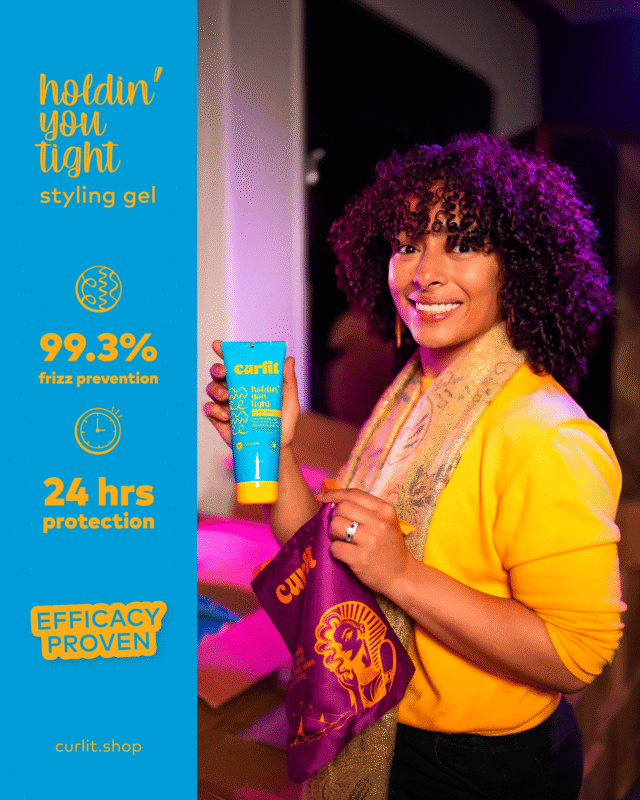
Proof, said simply: In a Croda efficacy study (CWR 11762, Sept 2025), Curlit Styling Gel showed 99% frizz protection in high humidity testing and performed up to 4.5x better than control. The wavy leave-in showed up to 41.5% style retention for 24 hours in 80% humidity.
Stop frizz humidity in Egypt for curly hair and wavy hair
Humidity is like steam in the bathroom. It gets into everything. Your hair reacts even if your styling was great. That is why your method matters more than the number of products.
Step 1: Diagnose your frizz type in 20 seconds
If it is dryness frizz: Hair feels rough, looks dull, and frizz shows up even indoors.
If it is humidity frizz: Hair looks fine indoors, then frizz appears after you step outside or later in the day.
If you are not sure: Use the “wet hair rule” anyway. It helps both types because it improves clumping and even distribution.
Step 2: Prep your hair so it can resist humidity
- Style on very wet hair. If your hair is “damp,” add more water first.
- Use slip for clumps. A leave-in step can help your hair group into neat curl or wave clumps.
- Keep roots lighter for wavies. Put most product on mid-lengths and ends.
If you need help choosing a direction, use Find your curl type first. It saves you a lot of guessing.
Step 3: Apply gel in a humidity-proof way
- Spread gel between your palms first, then glaze over the hair.
- Scrunch upward to encourage definition.
- Stop touching. This is the hardest part, but it is the most important part.
Quick mindset shift: If you keep touching your hair while it dries, it is like opening the oven every 2 minutes. It will not “set.”
Step 4: Let the cast form, then break it gently
A cast can feel crunchy, but it is basically your definition wearing armor for the day.
- Wait until fully dry. If hair is even slightly damp, breaking the cast can invite frizz.
- Break the cast gently. Scrunch with soft hands. Start with ends, then move upward.
- Do not overdo it. You are softening, not flattening.
Step 5: Long-day fix (refresh without restarting)
- Mist only the outer layer where frizz shows.
- Re-scrunch 3 to 5 sections instead of your whole head.
- Hands off again while it settles.
Routine links: If you want a full routine plan, see Curly Hair Routine or Wavy Hair Routine. For common questions, visit Curlit FAQ.
Common Mistakes
- Applying gel on half-dry hair: It spreads unevenly, then humidity finds the weak spots.
- Using heavy product at roots (especially wavies): You lose volume and still get frizz on the ends.
- Touching while drying: This breaks clumps and invites puff.
- Breaking the cast too early: If hair is damp, frizz shows up faster.
- Refreshing the whole head every time: You usually only need to fix the top and outer layer.
FAQ
Q: Why does humidity make my hair frizz even when I use gel?
A: Often it is application and drying. Gel works best when applied on very wet hair, then left untouched until dry.
Q: What is a gel cast, and do I have to break it?
A: A cast is the firm layer that helps definition hold. You can break it after hair is fully dry to get softness back.
Q: How do I stop frizz without losing volume?
A: Keep roots lighter, focus product on mid-lengths and ends, and avoid heavy refresh at the scalp.
Q: My waves disappear fast in humidity. What should I do?
A: Style on very wet hair, use a lighter hand at roots, and let a cast form before you soften it.
Q: Can I refresh without making hair sticky?
A: Yes. Mist lightly and reactivate only a few sections instead of adding a lot of new product everywhere.
Q: If I am styling a child’s hair (3+), what is the safest approach?
A: Keep it gentle and minimal. Avoid eyes, use small amounts, patch test first, and stop use if irritation appears.
Mission + Limits
Mission: Help you keep defined curls and waves in Egypt humidity with a simple, repeatable method that fits real life.
Limits: This content is cosmetic and educational only. It does not diagnose or treat medical conditions. Results vary by hair type, technique, porosity, and environment.
Patch test reminder: Patch test any new product before full use. Avoid contact with eyes. For kids 3+, keep routines extra gentle and supervised.
Sources
- Croda efficacy study (CWR 11762), Sept 2025: Curlit Styling Gel high humidity frizz protection and performance vs control; Curlit wavy leave-in 24-hour style retention in 80% humidity.
- General hair care principles: humidity impact, friction during drying, and patch testing best practices.