

curly, Tips and tricks, wavy
Keep Your Curls or Waves Voluminous Under a Hijab
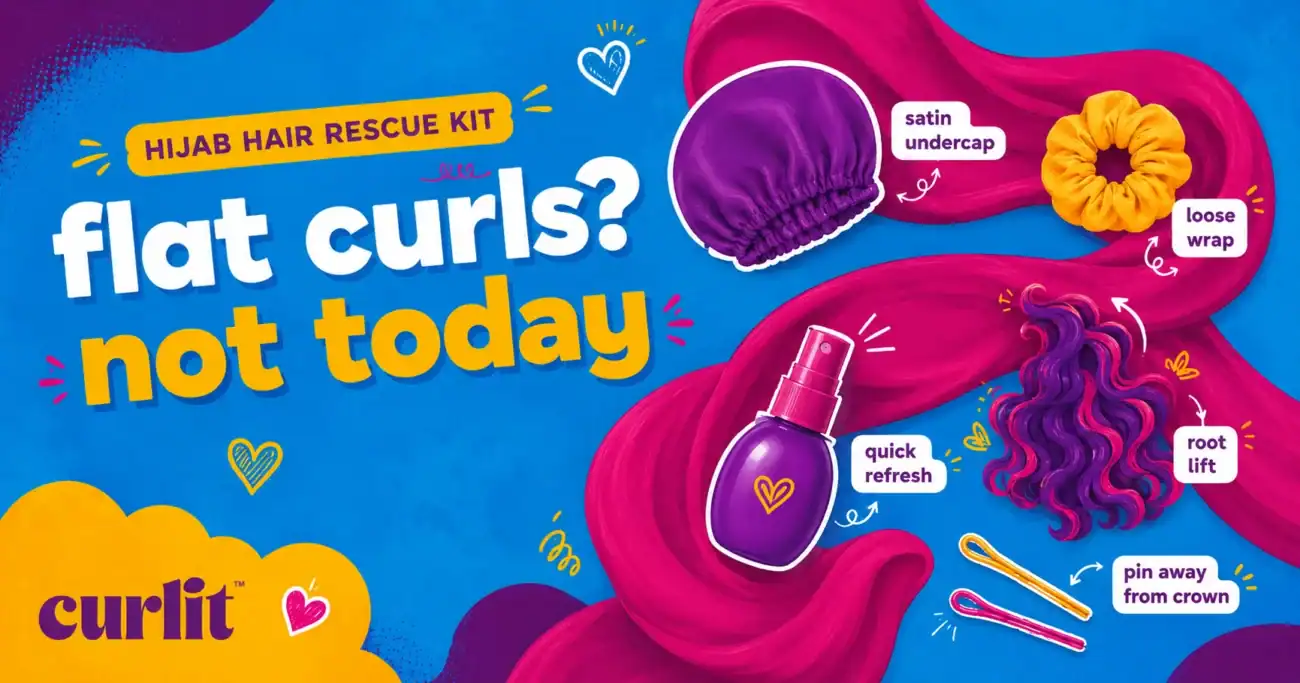
Jun
How can you keep your curls or waves from flattening under a hijab?
If your curls or waves look great at home then go flat the moment you put on your hijab, you’re not imagining it—daily covering changes how your hair sits.
The goal isn’t “perfect volume all day.” It’s reducing the two biggest causes (compression and friction), styling in a way that resists getting squashed, and having a simple refresh you can do quickly in private. In Egypt, weather also plays a role: humidity can leave hair both frizzy and limp under a scarf.
Below is a routine you can actually stick to—before hijab, during the day, and when you take it off—plus small tweaks for curls vs waves.
Table of Contents
Facts Card
Short answer: To keep curls or waves from flattening under a hijab, focus on (1) reducing compression and friction (use a satin/silk undercap and avoid tight crown wrapping), (2) styling on fully dry, “set” hair with lightweight products, and (3) doing a quick refresh in private with a light water mist and gentle scrunching—then lift roots with your fingertips for volume.
- Continuous covering leads to flattening mainly from compression and friction—not just product choices.
- Humidity in Egypt can make hair both frizzy and limp under a scarf.
- Satin or silk undercaps reduce friction and help keep definition.
- Prepping hair while fully dry and set improves results.
- Both curly and wavy patterns benefit from gentle, product-light prep and refreshes.
Curly vs Wavy Comparison
| What changes | Curly hair | Wavy hair |
|---|---|---|
| What “flat” usually looks like | Curls may stay curly but look pushed down, less springy, or frizzier at the hairline. | Waves often lose root lift first and can fall straighter through the day. |
| Best product approach under a hijab | Use enough moisture/definition to keep clumps formed, but avoid heavy build-up at the roots. | Go lighter than you think; too much cream/oil can make waves disappear faster. |
| Most effective refresh move | Light mist + scrunch, then give curls a minute to settle before re-covering. | Root lift (fingertips at the scalp) + light mist on flattened sections for bounce. |
| Updo choice for longer wear | Loose pineapple or loose bun to avoid crushing curls at the crown. | Loose pony, low braid, or very loose bun; avoid tight top knots that kill root lift. |
Step-by-step Curl and Wave Guide
Why curls and waves flatten under a hijab
Flattening happens for practical reasons you can work around:
– Compression: hair is held close to the scalp for hours.
– Friction: fabric movement (and undercap seams) can disturb definition.
– Moisture + weather: in Egypt, humidity can make hair both frizzy and limp under a scarf, especially on long days outside.
– Fabric behavior: some fabrics hold onto moisture and heat more than others, which can change how your hair looks by the time you take your hijab off.
One key point: Continuous covering leads to flattening mainly from compression and friction—not just product choices.
How it shows up can differ:
– Wavy hair often loses root lift first, then the wave “falls straight-ish.”
– Curly hair may keep the curl shape but look pushed down, less springy, or frizzier around the hairline.
- Treat flattening like a “pressure + rubbing” problem first, then a product problem.
- If your crown is always flat, check how tight the wrap is at the top and where pins sit.
- If your ends look fine but roots are flat, focus your prep and refresh on root lift, not more product on lengths.
Routine tweaks before you put on the hijab
Your best chance at keeping shape is what you do before you cover.
1) Style only when your hair is fully dry and formed
If you cover hair while it’s still damp or not fully “set,” it’s more likely to dry in a flattened position. Prepping hair while fully dry and set improves results.
2) Keep products light (especially for waves)
You want definition support, not weight. Both curly and wavy patterns benefit from gentle, product-light prep and refreshes.
– For waves: a little too much cream/oil can turn “soft waves” into “flat hair.”
– For curls: you may tolerate slightly richer leave-in than waves, but build up slowly.
3) Use an undercap that reduces rubbing
A small accessory can make a big difference: Satin or silk undercaps reduce friction and help keep definition.
4) Put hair up in a shape-friendly way
For longer wear days, avoid tight buns at the crown. A loose high pony (“pineapple”), loose bun, or low braid can preserve pattern better than compressing everything into one tight knot.
- Wait until hair is fully dry before covering—even 15–30 extra minutes can matter on busy mornings.
- Use the smallest amount of product that gives you definition; add water (not more cream) if you need reshaping.
- Choose a smooth satin/silk undercap and keep seams away from your most fragile/frizzy hairline.
- Secure hair loosely so the curl/wave clumps aren’t being squeezed flat at the crown.
During the day: minimizing flatness + a quick refresh
Realistically, you can’t “fix” squashed hair in public—but you *can* prevent it from getting worse and do a quick refresh in private.
Prevention while wearing the hijab
– If your style allows it, keep the crown area a bit less tight (comfort first).
– If you can adjust pins, avoid placing them directly on the same spot every day.
Example midday refresh (5 minutes, in private)
1) Take off your hijab/undercap.
2) Lightly mist your hair with water (or dampen hands and smooth/scrunch).
3) Scrunch curls/waves back into shape.
4) Lift roots with fingertips (gentle shaking at the scalp is often enough).
5) Give it a few minutes to settle before covering again.
If you tend to get frizz at the front, focus the mist/scrunch there—don’t soak the whole head.
- Keep a mini spray bottle in your bag; refreshes work best with light water, not heavy re-application.
- Lift roots with fingertips before re-covering; root lift reads as “volume” even if lengths stay the same.
- If you’re getting flatness in one exact spot, move pins/pressure points to a new place.
End-of-day recovery: bring back volume after you take it off
When you remove your hijab, give your hair a reset before you judge your “curl day.” Flattening doesn’t mean your pattern disappeared.
A simple recovery routine:
1) Flip and shake: flip your head upside down and gently shake at the roots for lift.
2) Light re-wet: mist with water where shape is lost.
3) Scrunch: scrunch back into wave/curl shape.
4) Let it breathe: if you’re going out again, give it a few minutes to air dry and settle before tying up or re-covering.
If you need more definition (especially on curls), use a *small* amount of your usual styler on the sections that truly need it—don’t coat everything.
- Do the flip-and-shake first; you may need less product than you think.
- Target the refresh to flattened zones (usually crown and hairline).
- Give hair a short “air time” before re-covering for evening plans.
Where Curlit fits in a hijab-friendly routine
A hijab routine works best when it’s simple and repeatable. Curlit’s approach is to keep curly- and wavy-friendly routines practical for Egyptian life—especially when you need quick refreshes and lightweight layering.
If you like a structured routine, think in three moments:
– Before hijab: choose lightweight, definition-supporting steps so hair feels touchable, not heavy.
– Midday (private): refresh with water + scrunch + root lift.
– After hijab: reset and re-form shape with minimal effort.
If you’re exploring Curlit, start with one product that matches your needs (lightweight support for waves, or definition-friendly basics for curls), then build only if you truly need more steps.
- Pick products that don’t leave your hair feeling coated—lightweight usually lasts better under daily covering.
- Build a “bag refresh”: mini spray bottle + a few minutes in private beats over-styling in the morning.
- If you’re unsure whether you’re wavy or curly, try lighter styling first; too-heavy routines can hide waves.
Helpful links: Shop Curlit.
Common Mistakes
- Putting on the hijab while hair is still damp or not fully “set.”
- Using heavy oils or too much cream right before covering (especially for wavy hair).
- Tying a tight bun at the crown and pinning in the same spot daily.
- Trying to fix flat hair by layering more product instead of using a little water and a quick scrunch.
FAQ
Q: Will leaving my hair open under the hijab stop flattening?
A: Not necessarily. Leaving hair loose can still get compressed and rubbed for hours; prep (fully dry hair, light products) and reducing friction usually matter more.
Q: Is it a good idea to oil my hair right before I cover it?
A: For many people, especially wavy hair, oiling right before covering can make hair look limp faster. If you use oil, keep it minimal and avoid the roots.
Q: Does flattening mean my curl or wave pattern is gone?
A: No. Flattening is often temporary. A light water mist, scrunching, and root lift can bring back definition once you’re in private.
Q: Do I need a satin or silk undercap?
A: It helps for many people because it reduces friction, but results depend on your fabric, wrap style, and how tight the crown area is—experiment and see what your hair likes.